


You notice some comforts right away in a home. Natural light lifts your mood. Silence calms your mind. Green views soften the city’s harshness. Then, there’s comfort that you feel without understanding why. A home where you wake up refreshed. Where afternoons don’t feel heavy. Where indoor spaces feel as inviting as outdoors. Most of the time, that subtle comfort depends on how well a building breathes.
In high-rise living, ventilation isn’t just a decor choice or something to improve later. It forms the basis of life inside the home.
The difference you feel, not see
You rarely notice good air. You definitely notice when it’s missing. Rooms that feel stuffy by noon. Condensation on windows. Lingering odors. Fatigue that appears without reason. On the other hand, well-ventilated homes feel light all day. Conversations flow easily. Sleep becomes deeper. The home supports your body, not the other way around.
This is especially crucial in vertical living, where multiple households share confined spaces. Without careful airflow planning, pollutants, moisture, and heat can accumulate unnoticed. Good ventilation keeps indoor areas balanced, fresh, and resilient throughout the seasons.
A home that supports everyday health
Indoor air quality directly affects yourphysical and mental well-being. Fresh air dilutes indoor pollutants from furniture, cleaning products, cooking, and everyday activities. It also lowers moisture levels that can lead to mold growth and respiratory issues.
Ventilation is vital for mental clarity too. Spaces with poor air often have higher carbon dioxide levels, which are linked to difficulty concentrating and feeling sluggish. When air is regularly refreshed, homes feel more comfortable for working, learning, resting, and just being present.
In this way, ventilation acts as a wellness feature that works quietly in the background, promoting health without drawing attention.
Designing for airflow, not just floor plans
Effective ventilation design begins long before selecting mechanical systems. It starts with the building’s orientation, spacing, and positioning of windows, corridors, and courtyards. When natural air movement is planned well, it can flow through homes, carry heat away, and refresh interiors naturally.
In high-rise developments, this is complemented by smart mechanical systems that activate when outdoor conditions aren’t ideal. The best buildings don’t rely solely on one method. They combine natural and controlled ventilation so residents enjoy consistency while maintaining a connection to the outdoors.
Comfort that extends beyond the apartment
Ventilation is just as crucial in shared spaces as it is inside homes. Fresh lobbies, lifts that don’t feel cramped, gyms that stay pleasant during busy times, and clubhouses that encourage longer visits all depend on careful airflow planning.
When common areas are enjoyable to use, residents gather more often. Children spend more time in play areas. Neighbors chat more. Communities feel more vibrant. In this sense, good ventilation also supports social well-being.
Efficiency and sustainability working together
Many believe that better ventilation leads to higher energy use. In reality, modern systems are designed to balance fresh air with efficiency. Heat recovery technologies, smart sensors, and zoning enable buildings to maintain good air quality while minimizing waste.
When combined with thoughtful landscaping and building orientation, ventilation strategies can reduce heat gain, support passive cooling, and lessen the need for artificial cooling. Sustainability and comfort can work hand in hand when planned together.
Why breathable homes hold long-term value
Homes that maintain good indoor air quality age better. They protect surfaces from moisture damage. They lower long-term maintenance issues. They appeal to future residents who increasingly value health-focused living.
For homeowners, this means daily comfort. For investors, it contributes to lasting value. A breathable home is not just healthier; it is ready for the future.
Where Acasa brings it all together
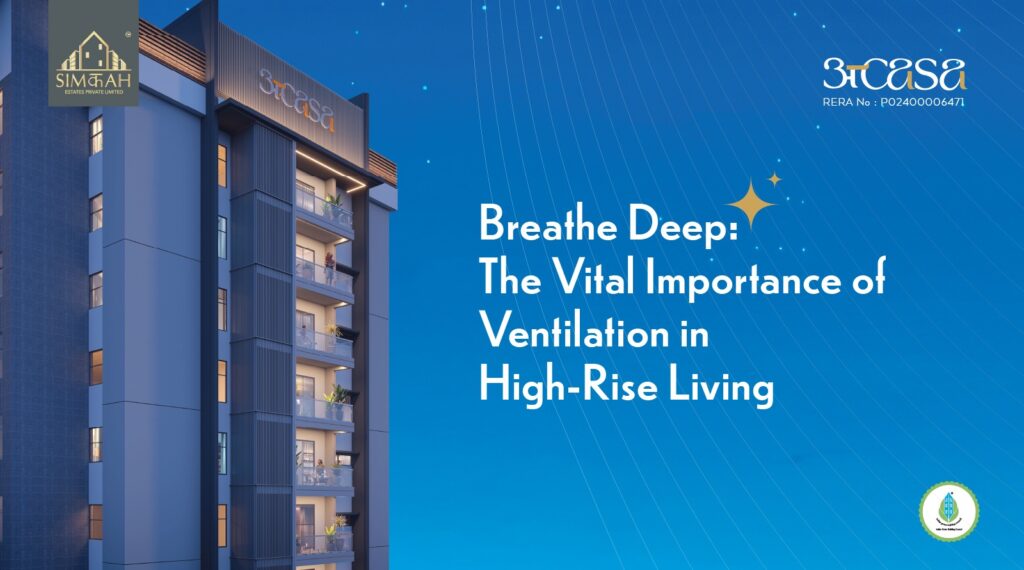
At Acasa by Simchah Estates, the idea of breathing space goes beyond greenery into the building’s structure. With 81 percent of the development dedicated to open green areas, airflow is naturally supported throughout the community. Landscaped courtyards, ample building spacing, and tree-lined pathways work together to cool the environment and promote natural ventilation for these ultra luxury 3.5bhk apartments in kokapet.
Inside the 3.5bhk kokapet high rise apartments, ventilation is designed to be consistent, reliable, and unobtrusive. Apartments invite cross-breezes where possible, while mechanical systems maintain comfort in every season. The result is a home that feels calm, fresh, and naturally comfortable throughout the day.
In a fast-paced hub like Kokapet, Acasa creates a much-needed pause. A sanctuary that starts with the very air you breathe. These kokapet 3.5bhk luxury apartments prioritize your physical environment to ensure that “coming home” feels like a literal breath of fresh air.
A quiet essential that defines good living
Ventilation rarely takes center stage in discussions about luxury. Yet, it affects how a home feels more than most visible finishes. It impacts sleep, focus, health, and how much you truly enjoy spending time indoors.
A high-rise that breathes well supports a life that does too. When ventilation is seen as a key design value, rather than just a technical requirement, it turns a residence into a place where comfort feels natural and well-being feels effortless.